

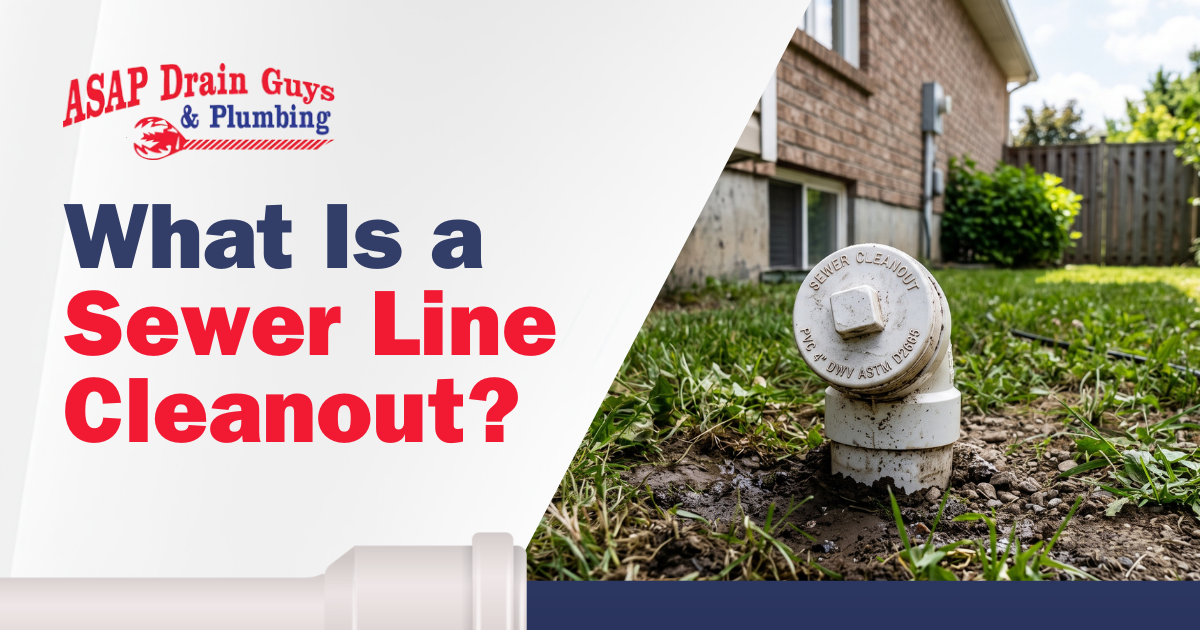
Aging infrastructure, tree root intrusions, and shifting soil may lead to a range of sewer issues in your San Diego area home. All of the drains and toilets in your home or business connect to a line that runs to the city sewer system at the street. If this line gets clogged, you may need to remove it via a sewer line cleanout, but what is it, and how does it work? ASAP Drain Guys & Plumbing is San Diego’s top 24/7 choice for rapid response to urgent plumbing issues, and we have answers to help you learn about sewer line cleanouts and how they can help you.
Understanding What a Sewer Line Cleanout Is and How It Works
A main sewer cleanout is an access point that connects directly to the sewer line so plumbers can remove major clogs and stubborn blockages from your San Diego home’s sewer line. Using the cleanout works in several ways:
- Your plumber may use a high-tech camera that goes deep into the line to find the exact location and source of the blockage right at the outdoor sewer line cleanout.
- The plumber may decide to remove the sewer cleanout cap and feed a motorized drain snake or auger directly into the pipe to break apart debris and other obstructions.
- For extremely stubborn blockages, high-pressure water jets could be used to scour the inside of the pipe directly at the cleanout point in a process called hydro-jetting.
Key Components and Design of a Main Sewer Cleanout Pipe
The main sewer cleanout pipe is a vertical access point that taps into the sewer lateral and is sealed with a screw-off cap or sewer cleanout plug. This plug, or cap, is typically made of plastic, brass, or cast iron and may be covered with a plastic box or concrete slab for protection. The pipe itself is usually between three and four inches in diameter and made of cast iron or PVC, rising from the main sewer line underground.
Differences Between One-Way and Two-Way Sewer Cleanouts
When it comes to understanding a one-way vs. two-way sewer cleanout, the difference is in the direction. A one-way sewer cleanout lets the plumber clear blockages in just one direction, usually going toward the street. A two-way cleanout typically features a Y- or U-shaped fitting that helps the plumber clear blockages in both directions at the same time, both toward your house and the street simultaneously. With a two-way cleanout, your plumber can run the snake or camera upstream or downstream, helping them pinpoint the exact location of the blockage much faster than with a one-way cleanout.
Common Locations Where You Can Find Your Sewer Cleanout
In most cases, the sewer line cleanout location is somewhere in the yard, typically within approximately three feet of the foundation, near the property line, or next to the sidewalk. It usually sticks just a few inches above the ground, and it’s often hidden by vegetation or mulch. In some cases, the cleanout tap is located underneath a concrete cover inside the garage.
How to Identify and Safely Remove a Sewer Cleanout Cap
To find the sewer cleanout cap, look for the vertical PVC or cast iron pipe near your foundation, and carefully unscrew the cap attached to it. If the cap is made of plastic, slowly turn it counterclockwise with a large crescent or pipe wrench, or with channel locks. For metal caps, spray penetrating oil around the threads, wait between 15 and 30 minutes, then apply firm, steady pressure with a pipe wrench to safely remove it.
Why Every Home Needs an Accessible Sewer Line Cleanout Access Point
Here’s why every home needs an accessible sewer line cleanout access point:
- The plumber can reach the clog immediately when the access point is easily accessible.
- Having direct access lowers your sewer cleanout installation cost, since it requires less labor time and eliminates the need to cut into your walls or remove toilets.
- An outdoor access point means the work is done from your yard, keeping sewage outside of your bathroom or basement.
- Knowing where the access point is prevents digging up your driveway, landscaping, or floors to find the pipe for sewer line repair and other services.
How Plumbers Use Sewer Cleanouts for Camera Video Inspections
A sewer camera inspection is easier via the cleanout access point because your plumber can use this to insert the camera directly into the line. Bright lights on the camera illuminate the inside of the pipe, and the plumber monitors the process via a real-time video feed. Using the cleanout for video inspections provides a direct access point that goes right into your home’s main sewer line.
Benefits of Hydro Jetting and Drain Snaking Through a Cleanout
A sewer line cleanout unclogs drain blockages because it provides a direct entry point into the main drain system. Drain snaking and hydro jetting through a sewer cleanout both provide a range of benefits, including:
- Less mess: Since most cleanouts are found outside of the home, any sewage or wastewater that gets pushed out during the cleaning process is done far away from the inside of your space.
- Easy access: Using a drain snake or hydro jetting via the cleanout gives your plumber a direct shot to tackle the blockage without having to work through winding indoor traps.
- Works with larger tools: While indoor drains are narrow, cleanouts match the larger diameter of your sewer line, making it easier to use mechanical drain snakes or large nozzles for hydro jetting.
What to Do If Your Home Does Not Have a Sewer Line Cleanout
If your home doesn’t have an obvious sewer line cleanout, start by looking near your foundation or by bushes in your landscaping to see if it’s hidden somewhere. If you confirm that there’s no cleanout, your plumber can remove a floor-level toilet to feed a motorized auger or camera directly into the main line that way. They can also use the roof vent to run the camera or snake down the plumbing vent pipe that protrudes from the roof.
When to Call a Professional Plumber for Main Line Sewer Service
Whether you’re a residential homeowner, commercial business, or HOA property manager, here’s when to call a professional plumber for main line sewer and drain services:
- Multiple drains in your home or business are clogged at the same time.
- You notice water or raw sewage backing up into the tub, sinks, or shower.
- You hear an unusual bubbling or gurgling noise, a common sign that air is trapped somewhere inside the main sewer line.
- There are unusually lush or bright green patches of grass in your lawn.
- A strong odor of rotten eggs or sewage is coming from your drains.
Contact ASAP Drain Guys & Plumbing Today!
Stuck with a plumbing or drain emergency in San Diego County? Contact ASAP Drain Guys & Plumbing right now for 24/7 service with a real person, no hidden surcharges, and $75 off your emergency call!
The larger equipment can’t make sharp bends; they need more direct access. That could be through a vertical vent but that means going up on the roof. That could be through a toilet connection, but that means removing the toilet first. So it’s far better to use something designed exactly for that purpose.
Sewer Line Cleanout
And that something is a sewer clean-out. They consist of a short pipe that taps into the sewer lateral and is sealed with a screw-off cap. Made of the same material as the sewer line they’re most commonly cast iron or plastic. The clean-out cap can be plastic, brass, or cast iron. They’re often covered with a plastic box or a concrete slab for protection and a better appearance. That cover can be hinged or simply lift off.
They’re usually located in the yard, usually within around 3 feet of the building foundation. Or near the property line, often beside a sidewalk. Or both. They stick just a couple of inches above the ground so they’re often hidden by vegetation or mulch. Some homeowners and landscapers hide them with a rock. And sometimes the clean-out tap is under a concrete cover in the garage.
There can also be clean-outs for a single drain pipe. These are usually visible on an outer wall and can be made of metal, ABS (black plastic), or PVC (white plastic).
When it’s time for sewer cleaning the cap is unscrewed, with the possibility of an unpleasant back-flow. In addition to using the tap for cabling (drain snaking) a plumber may also use it as an access point for larger advanced sewer cameras to make a video inspection of the line and/or blockage.
Tips
- Newer homes usually have a sewer clean-out, but older homes may not.
- Since they can be hard to find you can save time and expense by finding yourself it ahead of time.
- The cap can be jammed so tightly that it simply can’t be opened. If that’s the case or there’s no clean-out, it’s usually worthwhile to have one installed. That makes the present sewer cleaning go better and can be a big dollar saver for future problems. It also brings the lineup to code for any future home sale.
- There are actually two types. A single clean out is a fitting shaped sort of like a “Y” with the tap coming off at about 45 degrees. That allows inserting a cable or camera in one direction. A double cleanout looks more like a “U,” which has two caps, and allows access in both directions.